
Sure, it is your job to protect your children? But are you being too over protective? And if you are, what is the cost of that to both your younger kids and to teens? And what can you do about being overprotective?
Read More
Sure, it is your job to protect your children? But are you being too over protective? And if you are, what is the cost of that to both your younger kids and to teens? And what can you do about being overprotective?
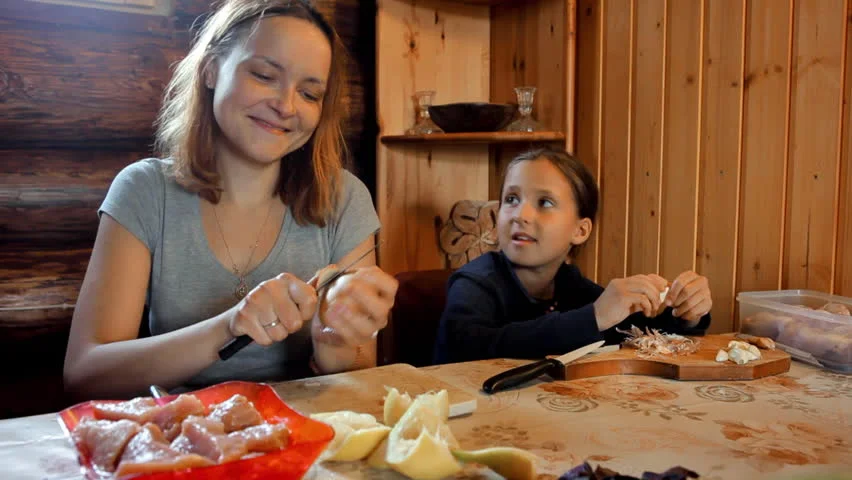
Read MoreMost parents understand and are comfortable with this when it comes to safety. Your two year old may want to climb the wobbly ladder by himself but you know that the risk is too great, so you offer a compromise--she may climb it with you hanging on to him tightly or she may climb her toy slide by herself. He may not use the big knife to cut onions but he may use the plastic knife to cut bananas or to spread butter.
Read MoreThere are many reasons to give kids chores (To see a comprehensive list, go HERE. Kids like to feel needed and capable. Chores help with both. When parents set up chores as “In our family we help each other,” kids see their work as being an important part of being a member of the family. Plus, kids like knowing they are able to do things on their own. They like being able to know that they were the one who made the living room sparkle or who saw to it that every family member had a sandwich ready to take in his lunch. When all the family members are contributing, it frees up time for family fun, and parents are less stressed. Parents have to get themselves ready for work. If the kids are making lunch for everyone while Mom and Dad are getting breakfast on the table, families end up having a few minutes to sit down and start the day together.
Read MoreThe first question to ask yourself, when considering how to keep your teen from rebelling, is what am I doing to help foster my kid’s independence and sense of autonomy?
Read More•Having their phones in their rooms with them. Yes, a smart phone makes a good alarm, but not if kids are texting and checking social media all night, so better to get your child a conventional alarm clock.
•Going fully speed ahead right up until bed time. People need wind down time. Just as when they were babies or toddlers, kids should have a routine that calms and soothes.
•Varying their bedtimes by a lot. While the occasional late night can’t be avoided, sleep experts agree going to bed at around the same time every night is helpful.
•Trying to make up for lost sleep during the week by sleeping until noon on Saturday.
Read MoreThe trend for highly supervised playdates grew over a lot of years, and there are some reasons that even if they change back, they won’t ever be quite the same.
Read MorePerhaps you grew up in the days before the playdate. As you went out the back door, letting it slam behind you, you shouted over your shoulder, “Mom, I’m going out.” Her “Be back by dinner time” drifted after you. You then found someone on the streets to play with. Or perhaps you went to a neighbor’s house and called in the door to a friend. Then the negotiations began. Did you want to climb trees? Shoot hoops? Create fairy villages in the shade of the bushes? (I seem to remember that my best friend and cross-the-street neighbor and I liked to do the same things but never seemed to want to do the same thing at the same time.)
Read MoreA recent Quora question was how do we teach our children priorities. The answer is simple. Every time you make a choice, you are teaching your child your priorities.
You are in the middle of cooking dinner, and your child demands that you stop what you are doing and come see this marvelous bug that he is looking at.
If you turn off the stove and go look, you are prioritizing curiosity, discovery, enthusiasm and in-the-moment excitement.
Read MoreBoth as a teacher and as a camp counselor, I have dealt with plenty of separation anxiety in older kids.
In early elementary kids, it is still common to have a transition period as a child enters a new classroom. Even if the child was perfectly happy in the classroom next door the year before, he may spend the first couple of weeks crying in his new classroom. Intellectually, he knows he was happy the year before and will probably be happy again, but in between then and now, he has spent a lovely, long summer in the bosom of his family. For him separation anxiety is wrapped up in feeling uncomfortable with a new routine. Once he has cycled through the weekly schedule a couple of times and feels he knows his teacher, he is fine.
Separation anxiety is a normal stage for kids to go through. It starts around 6 months and usually tapers off around 2 years old. During these months a baby is first gaining the cognitive recognition that you still exist when you are not there, which means baby can now miss you when you are not there. The problem often intensifies because at the same time baby realizes that her primary source of food and comfort can leave her, she is also testing the ways in which she is an individual. That's scary! A lot of separation anxiety is about finding that fine line between growing more independent and at some level still knowing she is fully dependent on you for survival.
Read MoreConcern over what your child is or is not eating is a common one. And it makes sense that we are concerned about it. Our fundamental job is to keep our children alive; and eating well is fundamental to thriving.
What makes the topic of eating especially charged is that it is one of the areas where children have control. You cannot force food into a child’s mouth, and even if you do, her upset about food being forced down her throat will often cause her to throw it right back up again.
Read MoreThis blog is in response to a letter a mom sent me about her son:
Dear Elisabeth,
I am so angry and mortified. My 10-year-old got caught shop lifting, and I am afraid this is a sign of much worse things to come.
Upset and Worried in Tulsa
Read More(In addition to being an author on parenting, Hogan is putting together an awesome in-person conference for parents in August 2017. Called the United We Parent Conference, it will take place in Southern California and will include great speakers (like me!) and breakout groups for parents to share their insights and issues.)
Read MoreThere is no one right answer for that because each family is different, but here are some guidelines:
Logical consequences should
•be related to the problem
•be age appropriate
•allow a child his/her dignity
And most importantly, you HAVE to be able to follow through with them or you are back at square one, so it has to work for your family and for that particular child (fair is not equal).
Read MoreTantrums are a natural stage in every child's development. While some parents with easy going children may have fewer of them to deal with, no parent avoids tantrums altogether. However, there are steps we can take to avoid and/or mitigate tantrums.
Read MoreSo far, everything you have done to build your consistency muscle has focused on the positive--you have modeled correct behavior, praised correct behavior and trained for correct behavior. But still your child is using disrespectful behavior! Now is when it get's real, when you are going to set an expectation and then hold the limit. This will probably mean that you need to have a consequence ready--one that you can absolutely follow through on.
Read MoreWhen your littles ones have free weekends and days off school, it can be tempting to sit them in front of the television with their favourite movie on, with the hope of some peace and quiet in the house. However, while technology can be extremely useful for both educating and entertaining your kids at times, it is important to find other ways to fill their hours than being glued to a screen constantly.
Sometimes it seems as though kids get bored every two minutes, and it becomes incredibly difficult to think of ways to keep them occupied. Here is a list of ideas to get you started, when thinking of activities for your kids that don’t involve a TV, smartphone or gadget of any kin
Read More