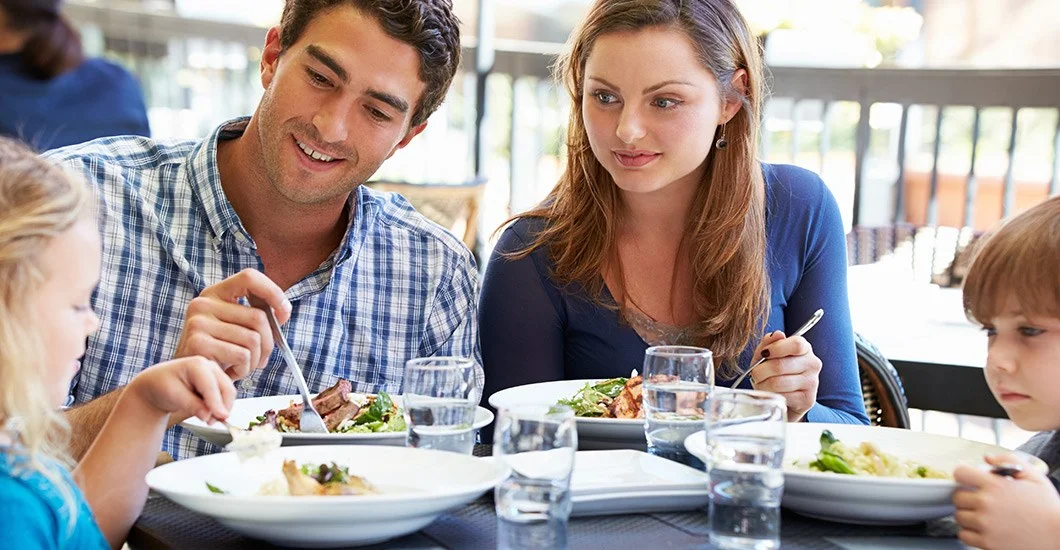
Three months into COVID-19, we are more antsy and our nerves are more frayed. It is no surprise that our kids’ behavior might be amping up. You should expect to see more moodiness and more negative interactions as they lose the structure remote learning (such as it was) provided. The best way to counteract that is CONNECTION. In a world that is feeling slightly crazy, it is even more important that kids feel anchored to the family. The forced physical proximity of being home together helps, but kids too often withdraw into their rooms and onto their screens. Get them off their phones and to the table for family dinner!
Read MoreNow that we are parenting 24/7, it can feel like we are responsible for engaging our kids 24/7.
What if we didn’t? What if we left children to their own devices so they could discover learning on their own? What if by doing so, we were actually helping our kids develop some important independence and autonomy?
Read MoreIt is important to be present, to appreciate the moment as we are #parentinginplace with our families. At the same time, dreaming is a powerful way to shift our reality, to inspire us and to reassure us, that we will not always be sheltering in place. Children of all ages from preschoolers to teens will benefit from some active, no-holds-barred dreaming.
Read MoreHow do you decide what is an appropriate level of freedom and independence for your child? How do you find the balance between keeping him safe and learning things on his own? We can’t teach our kids to make good judgements about decisions if we never give them the space to make decisions independently. On the other hand, it is your job to provide limits that will keep your kids from going too far off course.
Read MoreThe levels of stress our kids are feeling today is part of the reason levels of anxiety and depression are sky rocketing. But parents can help kids choose healthy stress and assure they have enough downtime to push the reset button, so they can perform optimally.
Read MoreRecently in my Middle School Moms Group on Facebook a lively conversation about whether we should pay kids for grades came up. What do you think? Here I share comments of parents in the group and then provide my own views on this issues.
Read MoreIn a piece for the New York Times, Pooja Lakshmin opines, “if you’re a parent who’s at your wits’ end, instead of beating yourself up for your failure to self-care, try shortening your family to-do list and setting some boundaries." This is good advice, of course, but she doesn't give any concrete advice on how to shorten the family to-do list. I got thinking about that and came up with this list for parents of new to elementary school kids. (In the comment section below, tell me what are the things that you say no to.)
Read MoreAs parents approach the teen years, they get fearful about all the pitfalls their sweet baby can fall into. Yes, it is scary. Between social media and new addictions like vaping, there is a lot that can pull a kid off track. There is no silver bullet for protecting our kids. Even companies like Apple that are trying to provide parental controls on their devices are failing to truly protect our kids. So what does buffer our kids? Well in studies of measures that support kids in thriving, a strong connection to family remains one of the best tools.
Get 4 Tips for Building a Healthy Relationship with Your Kids
Read MoreThe new school year brings new hopes but also new fears about acceptance and fitting in. This is never more true than for middle school students (though the advice here is good for all grades). Parents can be proactive about talking to their kids about how to handle bullying before it even comes up as a problem.
Read MoreOne of the reasons that we are seeing anxiety and depression increase at such alarming rates is because children are so over programmed that they do not get the downtime they need. Additionally, getting kids to their additional activities adds stress to the whole family system. Parents feel a lot of pressure to provide their kids enriching opportunities, but that learning is coming at a very high cost.
Read MoreDo I ever recommend to a client that they see a therapist? Yes! As a parenting coach, I am focused on getting parents the skills they need to run their homes more harmoniously and to have closer, more connected relationships with their kids. Sometimes a person’s mental health keeps a parent from fully focusing on their kids, and it can be hard to make the progress they need to transform their families. That’s a great time to see a therapist.
Read MoreWe get thrown as parents when our kids ask (demand!) something that they know we are going to say no to. Have we ever said yes to a popsicle for breakfast? No! So why would they even think to ask? Read to find out .
Read MoreParenting a teen is a new game! The main goal of parenting a teen is to raise an adult. That means your main parenting task between roughly 12 and 18 is to make the shift from being the captain of the ship to being the wise guide. After all, it is simply not possible to drive down the street for you child and to claim that your child is learning to drive. Before he or she can get a license, your child has to get behind the wheel and drive down the street without you in the car. Keep these three metaphors in mind in helping you be the parent of a teen.
Read MoreThis piece is written by Tyler Jacobson. I like having a dad’s perspective and find his wish for his daughter especially touching because I’m not sure men always articulate in their mind how much they want their daughters to have a voice. Tyler expresses it as, “ I wanted [my daughter] to be confident and comfortable in who she is, in spite of constant outside voices clamoring for her to conform and be someone else.” In this blog Tyler describes his own personal approach with reference to what the experts say about each step.
Read MoreParents often worry that their kids aren’t motivated to do anything beyond play video games or post on social media. The truth of the matter is is that there is a lot in kids’ daily lives that works to squash personal motivation. Here are some tips parents can use to rekindle their child’s natural eagerness to interact with the world and to take pride in what they do.
Read MoreSlow and Steady Wins the Race when it comes to overcoming anxieties and phobias. Too often it is hard for us to slow down and be empathetic with our children and their fears. And sometimes we are so afraid of upsetting them that we do everything we can to avoid the situation that triggers the fear. As with so many things, that answer lies in the middle. Help your child take baby steps towards mastering his fears. That way he will feel supported and seen and heard ; and at the same time you help him develop the skills and persistence he will need so much in life.
Read MoreFeeling that you are the primary parent is a significant challenge that seems to fall mostly to moms— even today. Part of that is still a vestige of time when women being in the workforce was the exception not the rule. And part of it is that the role of perfect mother has so been put on a pedestal that women feel enormous pressure to be responsible for everything in their family—even when they have full responsibilities at work.
Feeling like or being the primary parent adds tremendous stress to already stressed families, and it is worth it to find more balance in taking responsibility for the running of the family and household. Read on to find out ow I support parents with that.
Read MoreEvery once in a while I publish a guest post—either because the person’s expertise in a given area is much more sophisticated than mine or because they offer a perspective I cannot. In this blog, dad Tyler Jacobson shares how he handled it when his 13 year old daughter broke some big family rules. I especially love the understanding he shows his daughter as well as the problem solving, all while keeping her accountable for her poor choices.
Read MoreShould You Make Your Kid Apologize?
That’s a tricky question! There is no doubt that our children need to understand the idea of an apology but given that there are different kinds of apologies for different situations, teaching our children to offer an apology is not a straight forward task. It certainly won’t be taught with a simple rule. Or with a single iteration. Let’s consider the nature of apologies and where our own practice lines up with our expectations of our children.
Read MoreAre you concerned that you are a helicopter or lawn mower parent? Do you know that you are one but don’t know what to do differently? One of my favorite techniques for giving our kids some space and encouraging some independent thinking is What’s your plan for that? Instead of mapping out how our child should tackle a homework assignment or chore or even a conflict with a friend, we give the problem to them for consideration. Of course, if they are floundering too much, we step in and help with some course correction (but resist the urge to take over!)
Read More